

Mixing hue variations in transparent media
WORKING WITH COLOURS:
Exploring Mixing Processes
Explore the subtractive mixing process by making variations of greens using watercolour paints
Details:
Elementary school and up
Time: 30 minutes
Learning Outcome: Notice and describe the variety of colours produced by mixing various yellows and blues in different transparent media.
Colour Concept: Colour mixing processes result in colour variations/colour characters. In the subtractive mixing process, the final mixed colour depends on the components and the media used.
Materials: Liquid watercolours
Liquid watercolour paints: yellow, blue, and magenta
Black India ink with brush, or black marker.
Brushes, plastic palettes, cup of water, paper towels
Instructions:
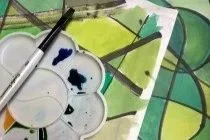
Figure 1. Filling in a variety of shapes with variations of mixed greens.
Use the black ink or marker to draw shapes on the heavy paper.
Mix the yellow and blue-coloured watercolours together on the palette and make a variety of vivid and pale greens. Paint approximately half of the shapes on your paper with these various greens.
Mix small amounts of magenta-coloured paint with these greens. In this way you will create a variety of muted and dark greens.
Paint the remaining shapes on your paper with the muted and dark greens.
In some of the coloured shapes, you can paint the same colour over top; in other areas you can paint a different colour over top. This will give you even more variations of greens.
Variations:
Use just one hue in watercolor and black to make as many variations of the hue as possible.
Use one hue (or a different set of two analoguous hues) plus black and white in opaque media - paints, pastels, gouache - instead of watercolors.
Vocabulary:
Questions & observations:
Are the mixed colours as you expected?
What’s going on?
In this exercise, subtractive mixing occurs when mixing transparent watercolour paints.
In the case of the subtractive mixing process using transparent watercolour paints, their transparency allows light to reflect off the white paper underneath the paints, back into our eyes. Therefore, transparent watercolour paints appear to sit on top of the paper which allows light to pass through them.
Find out more:
See glossary discussion on the subtractive mixing process and a thorough discussion in comparative mixing.

