CLP Cornerstone Pathway
Key Exercises
The Cornerstone curriculum consists a scaffolded pathway based on the CLP Cornerstones. Each section includes three sets of exercises that introduce fundamental colour concepts related to each cornerstone.
The Cornerstones Pathway include key hands-on exercises plus optional supplementary exercises that can be done in class or at home to help reinforce the concepts.

EXPERIENCING COLOURS


Colour is an essential part of our lives.
Swatch Safari
Colour Diary
Scavenger Hunt
Naming Game


Our emotional responses to colour are complex.
Character Associations
Colour/Emotion/Faces
Mood Clock


Colour is an essential part of our lives.
Surrounded by Colour
Living in Colour Quiz

DESCRIBING COLOURS

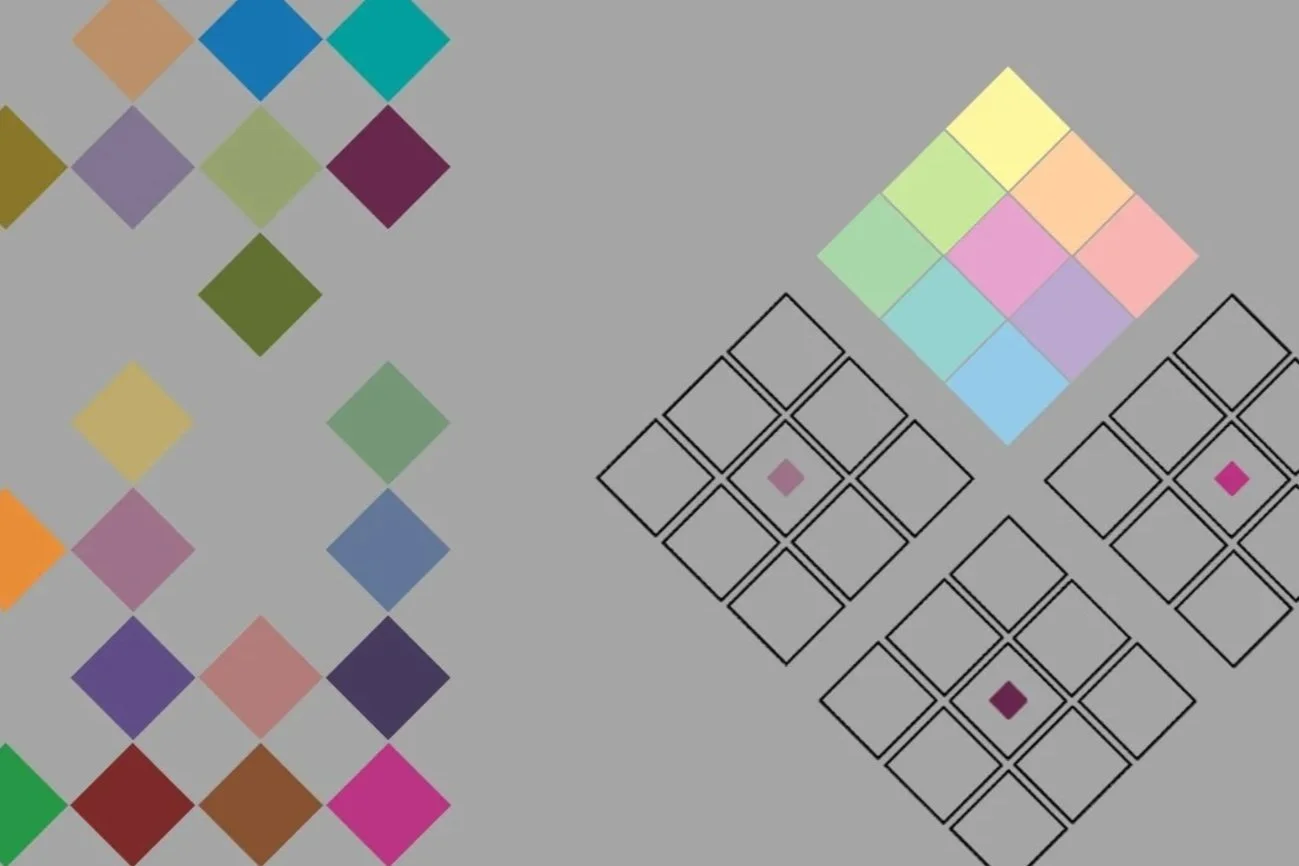
Colours can be described by their hue family and character.
Free Sort
Hue Families Sort
Characters Sort
Household Sort
Odd One Out


Colour organization is 3D.
Achromatic vs Chromatic
Lightness/Value Sort
Chroma Sort


Colour organization is 3D.

PERCEIVING COLOURS


Light is key for colour.
Lights On and Off
Orange Cube


Colour is a perceptual experience.
Examining the Spectrum
Expanding the Spectrum
Non-Spectral Colours
Coloured Light Sources
Afterimages
Blind Spot


Colours are contextual.
Koffka Ring
Munker-White Illusion
Simultaneous Contrast
Changing Spatial Contexts

WORKING with COLOURS
When we mix coloured media, the resulting mixture depends on the process.
Colours communicate.

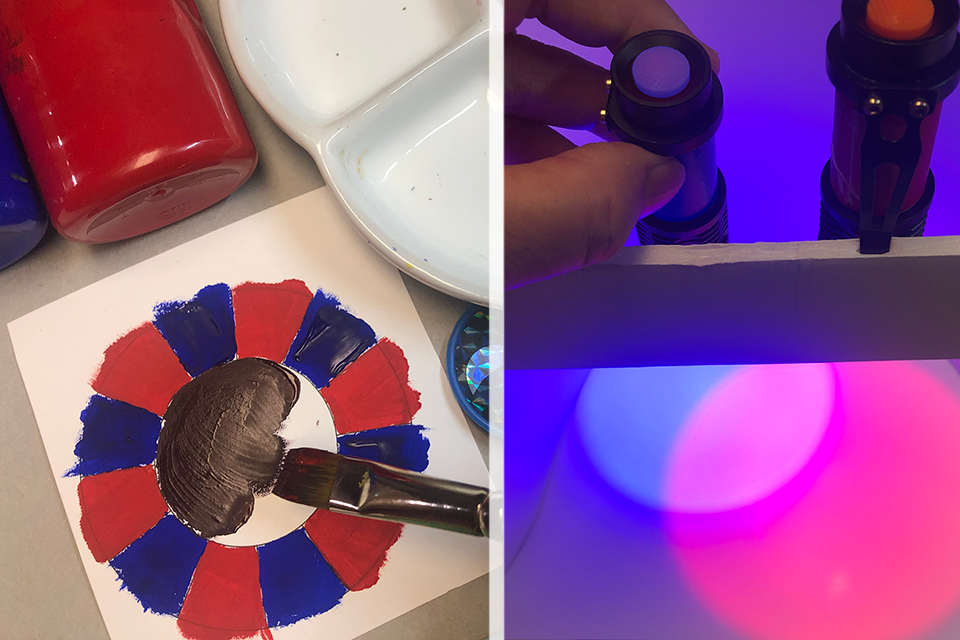
Mixing results depend on the process.
Compare Red+Blue Mixing Processes
Compare Complementary Systems

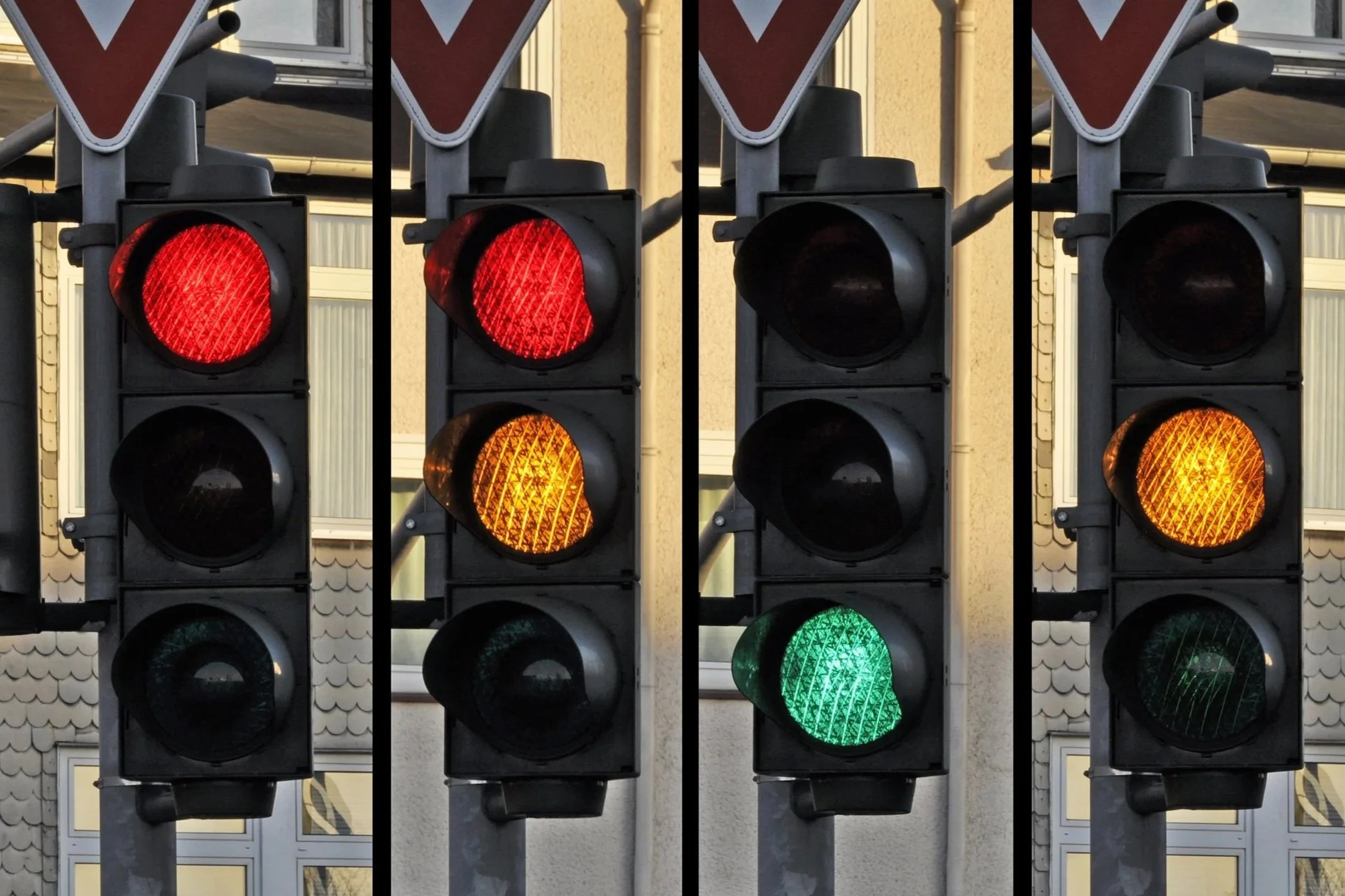
Colours communicate.
Character Associations
Squares and Diamonds


Mixing results depend on the process.
Simple Additive Mixing of Light
CMYK Process Printing
NOTES:
1. The exercises can be done back to back or mixed and matched depending on where colour fits into your curriculum planning.
2. All the exercises can be modified to make them age appropriate for your students. We welcome your suggestions for variations on the exercises depending on age and abilities.
3. We encourage you to share how you expanded on/customized the exercises for your students.
See FAQ entry: Can the exercises be adapted for students with limited colour vision?